
Navigating Emotions: Understanding, Reacting, and Healing
Have problems with judging yourself or others? Read on.
It's a common tale: folks beating themselves up over their emotions and casting judgment on others for theirs. But here are two key points that could really help tackle this issue:
First off, feelings aren't a menu we pick from; they're automatic responses to our experiences. We can't choose what we feel, but we can choose how we react to those emotions. That's a lifelong skill, one that takes practice every day.
Secondly, what we feel isn't just about the present; it's also influenced by our past experiences. Our brains are wired to be efficient, always referencing past situations to inform our current feelings. But sometimes, especially in cases of trauma, what we remember isn't a solution, it's a coping mechanism. Coping doesn't let safety responses complete; it bypasses them, potentially causing more issues down the line.
So, how do we deal with all this? Well, judgment isn't the answer; it only makes things worse. Instead, we need empathy, compassion, and a mindfulness practice (and maybe some trauma therapy) to help us understand our emotions better and decide if our responses are the ones we want.
Navigating the Depths of Human Emotions: Understanding, Adapting, and Processing
The common approach to emotions is wrong. Check this approach out. Emotions are both simple and complex, residing at the core of our human experience. At their essence, our brain houses seven fundamental emotional systems, intricately connected to our body's nervous system, giving rise to our basic emotional responses.
Human Emotions
Emotions are both simple and complex, residing at the core of our human experience. At their essence, our brain houses seven fundamental emotional systems, intricately connected to our body's nervous system, giving rise to our basic emotional responses. These seminal emotions, as elucidated by pioneering affective neuroscientist Jack Penksepp, encompass lust, anger, excitement, panic, grief, fear, care, and joy. Antonio Damassio, another prominent neuroscientist, posits that emotions serve as feedback mechanisms, gauging our survival status. In essence, they are signals, indicating the sustainability and safety of our bodies, relationships, and environment, and guiding us on adaptive behaviors for survival.
However, uniquely as humans, we possess the neo cortex, a cognitive domain enabling us to override and suppress our primal emotions. This cerebral region facilitates higher-order functions like reasoning, reflection, and planning. Yet, when we stifle our emotions to conform to societal norms — refraining from reacting aggressively when provoked by our boss or withholding tears in public places — we inadvertently obstruct our access to their inherent wisdom and guidance.
Running in the Waves: A Lesson in Emotion and Adaptation
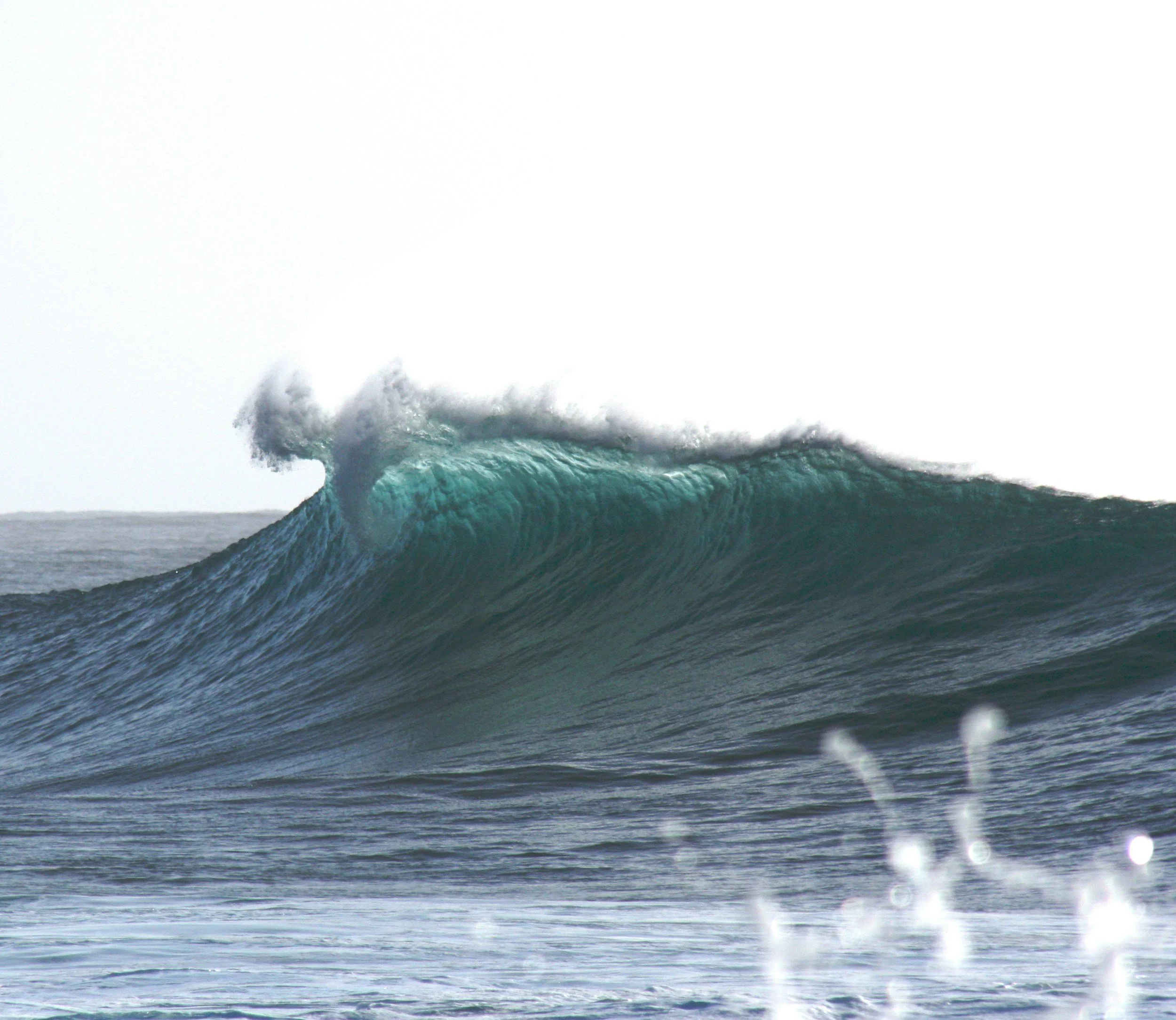
When my son was around five years old, we went to the beach on a family vacation. He was enjoying playing in the surf with his older cousin. With each rush of crashing waves, he'd dart into the water, only to be knocked over and then hurriedly return to my side. His little hand would reach out, seeking reassurance, before running back to rejoin his cousin's antics. What was going on? The force of the waves (and the sound of them) along with the brief moments submerged underwater scared him which signaled to him the potential danger of the situation. In order to adapt to survival he sought solace in my presence, finding comfort in the care and strength I offered. With this reassurance, he would gather the courage to venture back into the waves, joining his cousin in play. Without my presence, he would have been compelled to find alternative ways to confront his fear, perhaps abandoning the water altogether or suppressing his emotions (of not only fear but panic as well when he didn’t have an attachment figure to connect to), enduring a tense, disconnected experience. Such suppression could have left him with unresolved energy, hindering his ability to fully engage with his surroundings until addressed.
Summary
At the end of the day we have to acknowledge and honor our emotions, both primal and societal, without judgment. While it's essential to temper our instinctual reactions to practice love and maintain social harmony, we mustn't neglect the importance of acknowledging and processing our emotions in safe spaces, allowing them to complete their natural course. Emotions, akin to balloons, inflate with tension, urging us to take action in order to release the tension and restore equilibrium. In confronting anti-social impulses, rather than condemning them, we should approach them with empathy and support, facilitating their resolution in a nurturing environment.
what is religious & spiritual trauma or abuse?
Understanding more about spiritual and religious trauma and abuse can help empowerment and healing.

When discussing spiritual or religious trauma/abuse, it's important to consider a few key points:
Language: Traditionally, this topic was often framed solely as abuse. However, there's been a shift towards using the term 'trauma' instead of 'abuse' to center the experience of the victim rather than the perpetrator. Additionally, it's essential to recognize that discussions around religious and spiritual trauma encompass various beliefs and identities. Whether someone identifies as religious, spiritual, or both, these terms are often used interchangeably in literature.
Transparency: Many individuals who have experienced religious/spiritual trauma have been part of environments characterized by high levels of control, often at the expense of transparency. Charisma often replaces transparency in these situations. Therefore, when discussing this type of trauma, I try to maintain transparency, cite sources, and minimize personal opinions to empower survivors.
Research: In terms of research (published materials that I could find from scholarly search engines when I did the search in 2022, personal contact with people who have researched and worked in this area as well as one podcast), much of what's available is qualitative, relying on personal narratives to identify common themes and understandings. Additionally, I have come across one quantitative research that employs mathematical and statistical methods to uncover patterns. Regardless of the type of research, since I'm not speaking to cults and sexual abuse from clergy, most studies involve small and often homogeneous groups, highlighting the need for more comprehensive and diverse research in this area.
Despite the available research, there's still no universally agreed-upon definition across the literature. (Ward, 2011; Swindle, 2017; Keller & Clark-Miller, 2022) This lack of consensus underscores the complexity of the topic. Below are a few definitions found in the literature:
Ward (2011) 'Spiritual abuse is a misuse of power in a spiritual context whereby spiritual authority is distorted to the detriment of those under its leadership. It is a multifaceted and multilayered experience that includes acts of commission and omission, aimed at producing conformity. It is both process and event, influencing one’s inner and outer worlds and has the potential to affect the biological, psychological, social and spiritual domains of the individual.'
Johnston (2021) 'Abuse and neglect are both traumatic experiences that disrupt the stability, order, and peace of everyday life, which affects the perception and sense of self, the sense of the world, the sense of others, and the sense of god that was believed before the traumatic experience.'
The Rise And Fall Of Mars Hill Podcast 'Spiritual abuse is what you call it when …someone leverages issues of eternal significance for power including the power to crush descent. It’s because people are invested in their spirituality so deeply that they are susceptible to the manipulations of someone who knows how to traffic in the language and emotions of religion and religious experience.'
To put these definitions a little more clearly, I'll recap them here in shorter and different language:
Ward (2011) sees spiritual abuse as a misuse of power in religious settings, messing up people's lives in a bunch of different ways, from their inner feelings to how they interact with the world.
Johnston (2021) says abuse and neglect mess with your sense of self, your relationships, and even your beliefs about the big questions in life.
And then there's The Rise and Fall of Mars Hill Podcast, which describes spiritual abuse as using religion to control and manipulate people.
Today I just wanted to lay a clear foundation for future discussions. While there's much more to explore regarding healing from these experiences, it's crucial to begin by defining our terms. By understanding the nuances of what we mean with words like spiritual and religious abuse and trauma, we can have a starting point from which to navigate these conversations with greater clarity and empathy.
References:
Casper, M. (Host). The Rise and Fall of Mars Hill. Christianity Today. [Podcast Link]
Johnston, C. (2021). The Predictive Relationship Of Religious Trauma and Spiritual Abuse on Meaning-Making, Trust, and Depression. Doctoral dissertation, Northcentral University School of Social and Behavioral Health, La Jolla, CA.
Keller, K. & Clark-Miller, A. (2022). Treating Religious Trauma. [Facebook Live]
Levine, P. A. (2015). Trauma and Memory: Brain and Body in a Search for the Living Past: A Practical Guide for Understanding and Working with Traumatic Memory. North Atlantic.
Levine, P. A., & Maté, G. (2010). In an Unspoken Voice: How the Body Releases Trauma and Restores Goodness. North Atlantic Books.
Swindle, Paula, J. (2017). A Twisting of the Sacred: The Lived Experience of Religious Abuse. ProQuest, LLC., Ann Arbor, MI.
Ward, David, J. (2011). The Lived Experience of Spiritual Abuse. Routledge. [http:.dx.do i.org//10.10801136746-76.2010.336206]
What you need to know about defenses to make your life better
What defenses actually has been lost in our culture. Understanding them can make your life so much better.

Making sure we know what’s in the Trojan Horse of our words
Words are more than just letters strung together; they're vessels of meaning. However, their effectiveness in communication relies on shared understanding. Consider the word "cool," which can mean temperature or admiration (“The water is cool - better turn the heater on.” vs. “The water is cool - I love the colors they put in.”), showcasing how meanings can shift subtly.
Similarly, psychological terms like "defense" have shifted beyond clinical contexts into everyday language, often losing their original nuances. "Defense," once describing an unconscious process to regulate unsolvable stress, now carries connotations of confrontation. We weaponize it to criticize someone by telling them they’re being defensive. Revisiting this term can unveil its profound significance in human functioning.
Two Fundamental Insights on Defenses:
Defenses Can Be Classified According To Developmental Stages. Many scholars, including famed psychoanalyst, Nancy McWilliams, have helped us understand that defenses evolve with age, mirroring our developmental stages. As our thinking and feeling abilities get more sophisticated so do our defenses. Usually this means our defenses are more pro-social and less isolating. However, when we encounter trauma when we’re young and we never get help for that we continue to use those younger defenses when facing similar stresses moving forward even as adults. For instance, consistent use of extreme withdrawal (an infantile defense) in adults can symbolize the need for trauma resolution. Of course given enough stress or limitations anybody may situationally regress to more primitive self protections.
Defenses Are Unconscious Self-Protection Processes: Defenses are automatic self-protective mechanisms, operating unconsciously to keep us safe. They shield us from recognizing and confronting uncomfortable emotions or threats that we feel helpless to solve. For instance, projection (another young defensive process) involves attributing our own feelings to others (e.g. “they’re mad, not me”), allowing us to avoid acknowledging and processing them ourselves. This process maintains a sense of security by dissociating us from alarming emotions. Without effort, we remain unaware of when, what, or how we're protecting ourselves. Through intentional work though, we can develop awareness of these aspects.
Embracing Defenses:
Defenses are not flaws; they're adaptive mechanisms ingrained in our survival. Rather than stigmatizing defensiveness, we should appreciate its role in safeguarding our well-being. Acknowledging past traumas and their influence on our defenses empowers us to cultivate awareness and choose adaptive responses. In kind, showing gentleness and curiosity towards others when they seem to be unaware goes a lot farther than accusation (accusation likely reveals we are feeling overwhelmed and engaging in a self protective process ourselves).
In essence, understanding the language of defenses fosters self-awareness and emotional growth, enabling us to navigate life's challenges with resilience and authenticity.
Understanding emotions: a deeper look
Emotions are potentially one of THE MOST misunderstood things in our western culture. Understanding them correctly greatly enhances your life. Check out these basics.

Emotions are complex and intriguing aspects of our human experience. They're not inherently good or bad; they simply are. Let’s explore what emotions really entail and how they influence us.
The Purpose of Emotions
Dr. Antonio Damasio, a renowned neuroscientist, suggests that emotions are essential for our survival. They provide feedback about the health and sustainability of our bodies, our relationships, and our environments. Emotions prompt us to act, helping us adapt to our current circumstances and ultimately, relieve emotional tension. For instance, sadness might encourage us to seek comfort through tears or hugs, while anger might provoke reactions like yelling or expressing frustration physically.
The Basics of Emotions
Emotions start as physical sensations in our body, akin to how our body regulates temperature. If emotional stimuli are too intense or too subtle, they cross a threshold, making us aware of our feelings. These sensations—like a twist in your stomach or a flutter in your heart—can evolve into conscious emotions if they're not overwhelming or suppressed due to fear.
Emotions and Trauma
Trauma can trap emotions in the physical body, leading to avoidance of bodily awareness. This avoidance is a defense mechanism against re-experiencing discomfort or pain.
Emotional Intelligence and Mindfulness
While emotions are crucial for survival and adaptation, not all emotional reactions are beneficial in a social context. Some can isolate us or cause trouble. Moreover, trauma can skew our perception of the present, making us relive past threats and perpetuate pain. This highlights the importance of being both attentive to and cautious with our emotions.
The Brain’s Pathways for Emotions
Our brains process emotions in two main ways: the slow road and the fast road. The slow road involves thought and reflection before action, allowing us time to assess whether our responses are appropriate. The fast road is instinctive and immediate, driven by primal urges. Both pathways are adaptive, depending on the situation.
Navigating Trauma and the Present
By spending time with ourselves, we can learn to distinguish between being present and operating automatically—a mode often influenced by past trauma. Mindfulness—recognizing how we feel, rather than simply experiencing emotions—empowers us to differentiate between past triggers and present realities.
Practicing mindfulness isn't an instant solution but a gradual process that builds the awareness necessary to make conscious choices. This awareness can lead to new behaviors and healthier automatic responses that are more aligned with our current needs.
In Conclusion
Emotions are not just reactions but signals that guide us through the complexities of life. By understanding and managing them, we can lead more fulfilling and adaptive lives.
Something you didn’t know about emotions
Emotions are like the thermostat in your home or the temp in your body. They have a set point and they have limits for how little or much they can be. When they move outside of those limits is when we feel them. When we feel them is when they begin to put a demand on us to do something to relieve the emotional tension.

Emotions are like the thermostat in your home or the temp in your body. They have a set point and they have limits for how little or much they can be. When they move outside of those limits is when we feel them. When we feel them is when they begin to put a demand on us to do something to relieve the emotional tension. Since emotions tell us about the health of our body, environment and relationships these actions have something to do with helping us adapt for surviving and thriving in the moment. For example, when you feel sad you are tasked to acknowledge that you lost something important and to grieve through crying, slowing down and seeking comfort. In doing that you truly adapt to the loss and set yourself up for living beyond it well. So the ultimate goal of feelings is to make you adapt so that you don’t feel much. For more on this look at the work of Dr. Mark Solms, Dr. Jaak Panksepp and Dr. Antonio Damasio.
Shifting perspectives: understanding your mental health through a biological lens
Your perspective on emotional well-being significantly shapes your actual emotional health.

Your perspective on emotional well-being significantly shapes your actual emotional health. For instance, labeling your condition as "I have depression" may lead you to view your emotional struggles through the lens of disease. This common but oversimplified understanding of mental health, including depression, can hinder effective coping and healing by suggesting that these issues arise in isolation, akin to catching a disease or inheriting it without context. This viewpoint may inadvertently foster feelings of helplessness by stripping the experience of depression of any meaning or reason.
However, a deeper appreciation of how our bodies and nervous systems interact with emotions, thoughts, and behaviors can profoundly alter our self-perception and emotional health. Consider the well-known nervous system responses: fight, flight, or freeze. These automatic reactions to perceived threats impact our physiology and psychology in complex ways, altering everything from blood flow and organ function to thoughts, feelings, and behaviors.
Take the "freeze" response as an example. This reaction, characterized by a metabolic slowdown, is often accompanied by fear, helplessness, detachment, and a reduced capacity for action—symptoms that closely resemble depression. When the freeze response is interrupted and fails to resolve, it can manifest as depressive symptoms, which, though they may seem unrelated to any specific event, actually stem from an incomplete biological reaction to perceived danger. Recognizing these connections can illuminate the meaningful origins of our emotional experiences, offering new paths for understanding and addressing our mental health.
Rethinking Mental Health: Beyond Symptoms and Illness
Mental health extends beyond medical diagnoses, emphasizing the role of trauma and its lasting impact on behavior as responses to past experiences.
Traumas lead to enduring fight, flight, or freeze reactions, highlighting these behaviors as survival strategies rather than symptoms of illness.
Viewing mental health through the lens of adaptiveness acknowledges coping mechanisms as contextually driven, shaped by individual experiences and environments.
Mental health is often framed within a medical model, where symptoms indicate an underlying "illness" to be treated. This approach, though logical for physical ailments, falls short in comprehensively addressing mental health, particularly when considering the impact of trauma.
Trauma, whether emotional or physical, can leave a lasting imprint on our nervous system. Unlike the straightforward treatment of a physical injury, emotional trauma involves complex reactions of fight, flight, or freeze that may become "stuck" in our bodies and memories. These reactions, along with associated feelings of helplessness and deep-seated beliefs about ourselves, become our automatic response to future stress, replaying old patterns of behavior that were once survival strategies.
Viewing these responses as mere symptoms misses the broader context. They are, instead, echoes of past experiences, not indicative of an organic disease but of a memory playing out its survival tactics. This perspective is particularly relevant for understanding conditions like developmental trauma, which stems from accumulated emotional wounds, and shock trauma, triggered by acute incidents.
While more complex mental health conditions like Bipolar Disorder and Schizophrenia present additional challenges, considering the role of memory and trauma may offer deeper insights into their nature, beyond genetic predispositions.
Shifting our view from a binary of "healthy" vs. "unhealthy" to one of adaptiveness allows us to see mental health as a narrative of coping and survival, tailored to the individual's context and time. This approach recognizes the uniqueness of each person's journey, emphasizing adaptiveness—not in terms of objective correctness but as a reflection of the individual's best efforts to cope within their specific circumstances.
From Conflict to Clarity: Uncovering and Transforming Insecure Beliefs with Mindful Awareness
It can be challenging to recognize the insecurities and self-doubts that surface during moments of conflict. These underlying beliefs often remain unnoticed, yet they trigger our body's fight, flight, or freeze response. Gaining awareness of these beliefs is akin to discovering who is behind the wheel, driving our reactions.
It can be challenging to recognize the insecurities and self-doubts that surface during moments of conflict. These underlying beliefs often remain unnoticed, yet they trigger our body's fight, flight, or freeze response. Gaining awareness of these beliefs is akin to discovering who is behind the wheel, driving our reactions. This awareness opens up the possibility to move away from instinctual survival tactics, rooted in fight, flight or freeze that may not be truly adaptive, allowing us to make choices that are more mindful, socially constructive, and genuinely beneficial.
Our self-perceptions (which are contextual and automatic - not choice based, they just happen and are based in past experiences) are frequently mirrored in our views of others. For instance, thinking of oneself as "weak, small, and helpless" while perceiving others as "powerful, uncaring, and threatening" can lead to a heightened sense of vulnerability and activate those defensive survival responses.
However, reacting in this way often exacerbates the conflict rather than resolving it. The question then becomes, how can we pause, become aware, and realign ourselves? There are numerous techniques to help us become present. One approach I find particularly effective is called "Orienting," a concept from Somatic Experiencing. For a deeper understanding, I recommend watching the video below.
Counseling Reimagined: Fostering Connection and Healing
In today's counseling world, a transformative shift is reshaping our approach to mental health. Moving away from traditional, problem-centric methods, we're now embracing …

In today's counseling world, a transformative shift is reshaping our approach to mental health. Moving away from traditional, problem-centric methods, we're now embracing a more nurturing path that highlights and strengthens what's inherently right within individuals. This new direction challenges the outdated view of individuals as 'problems to be solved,' reminiscent of a broken vehicle in need of repair, and instead focuses on fostering personal growth and connection.
Our lives are a complex mosaic of relationships and emotions, each playing a crucial role in our mental health. Contrary to the notion of 'brokenness,' mental health challenges are our natural responses to life's stresses and perceived threats. They're rooted in our experiences and the protective strategies our minds deploy to navigate the world.
Take the example of someone struggling with anger, which strains their relationships and career. This anger often stems from deeper feelings of vulnerability and a subconscious search for security, which paradoxically leads to more instability and frustration. Traditional counseling methods, which typically focus on highlighting and correcting 'wrong' behaviors, may inadvertently deepen these feelings of vulnerability, pushing individuals into a defensive state.
In contrast, today's counseling embraces a compassionate, understanding approach that walks alongside individuals, acknowledging their feelings and experiences as rational responses to their life circumstances. This relational method emphasizes connection, shared vulnerabilities, and collaborative emotion management, fostering a deep sense of empathy and understanding. Ironically, when more traditional interventions and contemporary trauma therapy are introduced within this context of this empathetic relationship, counseling becomes more effective, promoting genuine and lasting transformation.
Thus, modern counseling is about more than just addressing problems; it's about understanding and supporting individuals within the rich tapestry of their lives and relationships, offering a path to healing characterized by compassion and effective support.
Recap:
- Counseling is evolving from focusing on problems to nurturing what's right within individuals, promoting personal growth and connection over fixing perceived 'brokenness.'
- Mental health challenges are seen as natural responses to life's stresses, rooted in our complex web of past relationships and emotions, moving away from the idea of individuals being 'broken.'
- Modern counseling prioritizes empathy, understanding, and collaboration, enhancing the effectiveness of both traditional and contemporary therapies when integrated by fostering a supportive, relational environment.