
Why Knowing Yourself Isn't Enough: What Neuroscience Teaches Us About Real Change
For you, the person sitting in the therapy chair wondering if change is possible, their work offers this: Yes. Your brain can change. Your patterns aren't permanent. But the vehicle of that change isn't willpower or positive thinking—it's emotional experience that updates your predictions about what's possible.

Ever leave a therapy session thinking, "we got deep but nothing feels changed"? You're not alone. A common pitfall in therapy is finding thoughts that are interesting, even illuminating, but never making that leap from idea to actual change.
Here's why: change requires experience, and the hallmark of experience is emotion. You can know everything about yourself—your patterns, your triggers, your history—but if that knowledge isn't accompanied by lived emotional experiences that update your brain, change remains unlikely. Insight without emotion is like having a map but never taking the journey.
I've been deeply influenced by the field of neuropsychoanalysis, a newer branch of psychoanalysis that takes science seriously without making it a new religion. It seeks to understand how we work so it can leverage those mechanisms clinically, all while keeping space for the art and practice of therapy and relationship. Within that field, two voices often overlap and sometimes disagree: Richard Lane and Mark Solms. Understanding their work offers real hope for anyone struggling to turn insight into transformation.
Richard Lane: Your Brain Can Rewrite Its Own Story
Richard Lane is a psychiatrist and neuroscientist who studies what he calls "memory reconsolidation." Here's the revolutionary part: your painful memories aren't set in stone. When you recall a memory, it briefly becomes changeable—like opening a file to edit it. If you have a new emotional experience during that window, the memory gets re-saved with new information attached to it.
This is why therapy isn't about endlessly rehashing the past. It's about bringing up old patterns in a context where something different can happen. When your therapist responds with empathy to something that once brought shame, or you feel safe where you once felt terrified, your brain literally updates the file. The old memory doesn't disappear, but it loses its chokehold on you.
Lane also studies emotional awareness—the ability to distinguish between "I feel bad" and "I feel disappointed that my effort wasn't recognized." Think of it like developing your palate for wine. At first, you might just know "red" or "white." But with attention and practice, you start noticing complexity, nuance, layers. The same is true for feelings. And here's why it matters: people who can't differentiate their emotions tend to have more physical health problems. Your body keeps the score when your mind can't read it.
The practical takeaway? Therapy should help you not just understand your patterns but feel something new about them. And developing your emotional vocabulary isn't navel-gazing—it's a health intervention.
Mark Solms: You Are Your Feelings (And That's Good News)
Mark Solms comes at this from a different angle, but arrives at a complementary truth. He argues that consciousness doesn't start with thinking—it starts with feeling. Your emotions aren't reactions to your thoughts; they're the foundation of your entire conscious experience.
This might sound abstract, but it has profound clinical implications. If feelings are primary, then the goal of therapy isn't to think your way out of emotions—it's to learn what your emotions are trying to tell you. Solms describes emotions as an "extended form of homeostasis," meaning they're your system's way of signaling what needs attention to maintain balance. Anxiety isn't irrational—it's information. Depression isn't weakness—it's a signal that something in your system needs addressing.
Solms also illuminates why you can't remember your early childhood but still feel its effects everywhere. Those early experiences create patterns that show up in your relationships, including with your therapist. You might not remember being dismissed by a caregiver, but you'll feel a familiar anxiety when you sense your therapist is distracted. This isn't a problem—it's the mechanism of healing. The pattern shows up so it can be worked with in real time.
The practical takeaway? Your feelings aren't obstacles to overcome—they're the messengers you've been waiting for. And the patterns you can't remember are still accessible because they play out in present relationships, where they can finally be updated.
Where They Agree: Memory Is About the Future, Not the Past
Here's where Lane and Solms converge beautifully: memory isn't primarily a record-keeping system. It's a prediction engine. Your brain stores the past to help you navigate the future.
This reframes everything about therapy. You're not doing archaeology, digging up artifacts to examine. You're doing architecture, using old materials to build something new. When you update a painful memory through a corrective emotional experience, you're not erasing history—you're teaching your brain new possibilities for what comes next.
This is why insight alone doesn't create change. Understanding why you have trust issues is interesting, but it doesn't update your prediction system. What updates it? Having an experience of being vulnerable with your therapist and discovering it's safe. Feeling the edges of panic and learning you can tolerate it. Expecting rejection and receiving attunement instead.
What This Means for Your Therapy
If you've been in therapy that feels intellectually stimulating but emotionally stagnant, these frameworks suggest why: change happens through felt experience, not just conceptual understanding.
Good therapy should include moments when you feel something new—not just think something new. That might look like:
Finally saying something you've been ashamed of and feeling accepted instead of judged
Staying present with a difficult emotion instead of reflexively avoiding it
Experiencing your therapist's genuine care even when you're convinced you're unlovable
Noticing you can tolerate uncertainty without collapsing into anxiety
These aren't dramatic breakthroughs. They're quiet updates to your prediction system, teaching your nervous system: this time, it can be different.
Lane would say you're reconsolidating memories through corrective emotional experiences. Solms would say you're learning to read and respond to your affective signals more effectively. Both would agree: your feelings aren't the problem—they're the path forward.
The Hope in All This
Both Lane and Solms are working to rescue psychoanalysis from its reputation as interminable navel-gazing by grounding it in neuroscience. But they're doing so without reducing human beings to brain scans. They're holding space for both the measurable and the meaningful, the empirical and the experiential.
For you, the person sitting in the therapy chair wondering if change is possible, their work offers this: Yes. Your brain can change. Your patterns aren't permanent. But the vehicle of that change isn't willpower or positive thinking—it's emotional experience that updates your predictions about what's possible.
You don't need to understand the neuroscience. You just need to find a therapist who gets this: that knowing yourself is the beginning, but feeling something new about yourself in relationship—that's where transformation lives.
Unlocking the Hidden Language of Emotions: How Wearable Technology Can Help Us Understand Our Deeper Feelings
Many of us struggle to identify and name our emotions, particularly when we've experienced trauma, grew up in environments where emotions weren't acknowledged, or simply weren't taught the language of feelings. This challenge is especially prevalent among men, who often face cultural pressure to suppress emotional awareness, and individuals with insecure attachment patterns, who may have learned to disconnect from their emotional experiences.
But what if technology could help us bridge this gap in emotional awareness?
Many of us struggle to identify and name our emotions, particularly when we've experienced trauma, grew up in environments where emotions weren't acknowledged, or simply weren't taught the language of feelings. This challenge is especially prevalent among men, who often face cultural pressure to suppress emotional awareness, and individuals with insecure attachment patterns, who may have learned to disconnect from their emotional experiences.
But what if technology could help us bridge this gap in emotional awareness?
The Science Behind Our Emotions
Dr. Jaak Panksepp, a pioneer in affective neuroscience, identified seven basic emotional systems that all mammals share: SEEKING, FEAR, RAGE, LUST, CARE, PANIC/GRIEF, and PLAY (capitalized to distinguish them as specific systems). These systems operate largely beneath our conscious awareness, yet they profoundly influence our behavior, relationships, and well-being.
Here's where modern technology offers a fascinating possibility: while we may not consciously recognize when these systems activate, our bodies tell the story through measurable physiological changes.
How Wearable Technology Can Help
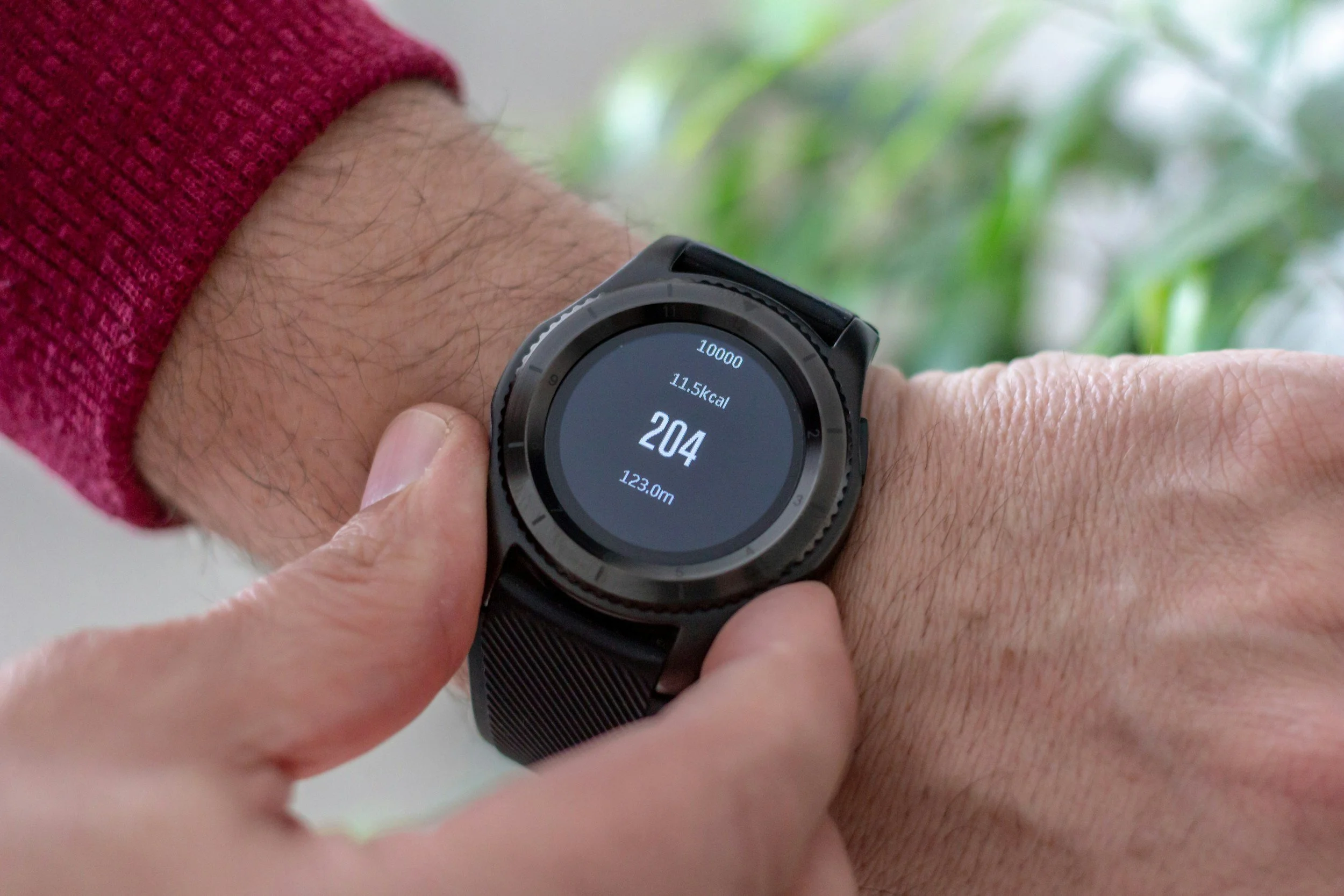
Today's wearable devices can track various physiological markers that correlate with emotional states:
Heart rate variability (HRV) patterns can indicate stress, fear, or social engagement
Skin conductance changes can signal emotional arousal
Movement patterns can reveal seeking or play behaviors
Sleep disruptions might indicate activation of the panic/grief system
Temperature variations can correlate with emotional states
For someone who struggles to identify their emotions, these biological markers can serve as objective signals that something significant is happening internally.
Real-World Applications in Therapy
Consider Mark (name changed), a client who reported feeling "fine" despite significant life challenges. His wearable device showed patterns of decreased HRV and disrupted sleep, typical indicators of an activated FEAR or PANIC/GRIEF system. This data provided an entry point for deeper therapeutic exploration, eventually helping Mark recognize and process feelings of abandonment he'd been unconsciously suppressing.
Particularly Valuable For:
Trauma Survivors
Many trauma survivors experience alexithymia – difficulty identifying and expressing emotions
Wearable data can help them reconnect with their bodies' signals
Provides objective validation of their emotional experiences
Men and Emotional Awareness
Cultural conditioning often disconnects men from emotional awareness
Technology offers a "concrete" way to approach emotional exploration
Data-driven insights can feel more accessible than abstract emotional concepts
Insecure Attachment Patterns
People with insecure attachment often struggle to trust their emotional experiences
Wearable data can provide a "secure base" for emotional exploration
Helps build confidence in identifying and expressing feelings
Practical Implementation
While consumer wearables can't definitively identify specific emotional systems, they can track important indicators:
Basic smartwatches can monitor heart rate and sleep patterns
More advanced devices can track HRV and skin conductance
Regular patterns in this data can help identify emotional triggers and responses
Using This Information in Therapy
Emotional Pattern Recognition
Review device data during therapy sessions
Identify correlations between physiological patterns and life events
Develop awareness of personal emotional signatures
Building Emotional Vocabulary
Use device data as a starting point for discussing feelings
Connect physiological states to emotional experiences
Develop more nuanced emotional awareness
Validation and Support
Objective data can validate emotional experiences
Helps overcome shame or doubt about emotional responses
Supports the development of self-trust
Important Considerations
While wearable technology offers exciting possibilities for emotional awareness, it's important to remember:
Technology supplements, but doesn't replace, therapeutic work
Individual patterns vary significantly
Data should be interpreted within the broader context of a person's life
Privacy and data security should be carefully considered
Moving Forward
As wearable technology continues to advance, its potential for supporting emotional awareness grows. For therapists and clients alike, these tools offer a new bridge between the unconscious emotional systems Panksepp identified and our conscious experience.
By combining traditional therapeutic approaches with the insights provided by wearable technology, we can help people – especially those who struggle with emotional awareness – develop a deeper understanding of their emotional lives and build more satisfying relationships with themselves and others.
The journey to emotional awareness may be complex, but with these new tools, we have additional pathways to understanding our deeper selves.