
Are these feelings shadows or real?
Our brains are prediction machines using the past to predict the future and un-healed past events cloud those predictions and can cause un-adaptive emotions.

Here is this post summarized in three sentences:
Our brains are prediction machines using the past to predict the future and un-healed past events cloud those predictions and can cause un-adaptive emotions.
Slowing down and reflecting using non judgement and lots of self acceptance helps us suss out whether our feelings are adaptive or not.
Working on our past helps our present be clearer.
It’s popular to say that you won’t let fear drive your life. While that’s maybe an important counter balance to living too much in fear or giving away your personal power it’s also a misnomer. The goal shouldn’t be to get rid of any core emotion, instead it should be to slow down when we are sped up and automatic so that we can listen to what we’re feeling (this might take a lot of self acceptance and be alarming to do). That is how we start to be truly adaptive. Remember what we feel is going to be based on both the present moment and your past. So it takes some time to suss out whether your intuition is adaptive emotions to the present moment or out of date feelings from the past being put on the current moment. Our brains are prediction machines. Their job is to efficiently predict what will happen based on the past. When the past is incomplete then we inaccurately predict. So in order to be more present we need to not only slow down we also need to process and complete or re-complete the past. Fear is important, without fear we would be much more vulnerable to being taken advantages of. That said, unnecessary fear keeps us small and under selling ourselves.
So to recap once again in those three sentences:
Our brains are prediction machines using the past to predict the future and un-healed past events cloud those predictions and can cause un-adaptive emotions.
Slowing down and reflecting using non judgement and lots of self acceptance helps us suss out whether our feelings are adaptive or not.
Working on our past helps our present be clearer.
Why organizations risk getting It wrong if they don’t understand the unconscious.
Don’t get caught managing people without understanding the unconscious…especially your own!

Much of our life is not conscious. We are designed to be efficient, life preserving beings which means that our brains will automate what it can when it can. How much of your day is automatic? Think about yourself at work (maybe in a meeting or in an interaction with a colleague). How much of how you feel, react, don’t react, hold your body even is automatic and repetitive? If organizations want change in their culture they need to focus on bringing people to the present moment. When we are in the present moment we feel our feet on the ground, we feel our sense of choice even though we’ve been in this moment thousands of times before. In the present moment we can identify fears that are not really adaptive and fears that ARE really adaptive. Here is one thing that makes being present more possible and one reason the present moment threatens people’s nervous systems and gets resisted:
Co-Regulation is easier when: we have another nervous system with us that is emotionally regulated (able to de-center from their own perspective and hold the other person’s without too much stress) it’s like we go from arms shaking trying to push that last rep up to a renewed strength and ability to smoothly push the bar back up. Co-regulation is increased by good eye contact, a tone of voice and emotional intensity that is in the ballpark of where the other person is but not exactly where they are (back it down a bit), reflective listening and plain listening.
Being present is threatening to some nervous systems because: a person may be in a self protective automatic mode. Meaning that doing something other that what they’re doing registers as moving away from safety and towards danger. Becoming present can feel relieving for some and for others it can activate an internal alarm system which may cause some anti-social behaviors. Knowing how to engage someone in those moments in order to increase safety is crucial for the psychological safety of a work place.
The 5 Reasons therapy or counseling is actually valuable for you!
Therapy is so popular these days but is often under or over sold. Find out what actually makes therapy valuable for you.

Therapy or counseling is often under sold or over sold. When it’s under sold people say it’s just talking to someone and that helps you feel better. It’s much more complex than that with a well trained and experienced therapist. When it’s over sold it’s put inside of marketing language that says it will solve all your problems instantly: all of a sudden you’ll be great with money, relationships are a breeze, you feel balanced emotionally all the time and you find $20 in your pocket. Obviously that’s not right either. So what makes therapy or counseling actually valuable?
Therapy or counseling offers you a chance to feel seen and known.
Don’t under-estimate this. Feeling seen and known is important for everyone and it causes us to feel better. It helps our emotions to express and feel relieved. It helps us feel like we’re not an alien and that we’re not alone. It helps us feel connected. All of this moves us into a place where we can be ourselves more naturally.
Therapy or counseling offers you a chance to change the memories that are responsible for the automatic ways you interact with yourself and the world that are a problem for you.
Likely the brain mechanism at the core of any real change in therapy is something called, memory reconsolidation. When we go through something enough times or intense enough one time we remember it and our brain creates an automatic way to “adapt” to such a moment. This includes what emotions to feel, the meanings we make about ourselves and others, how to hold our body, what to do with our voice and our gaze, how intense to feel, what to do behaviorally, etc. This automatic thing becomes unconscious and then starts to control our lives around those situations or similar situations that still activate those automatic ways. Impacting those memories (whether they are memories we think or memories we just feel) causes new automatic ways to begin to be made.
Therapy or counseling offers you a chance to gain skills of self regulation.
This is not easy and a lot of therapies don’t teach this well enough. Knowing how to regulate your emotions and re-balance your nervous system is not intuitive to most. Learning this skills can change your life. In therapy we learn these skills both through education and practice together but also through the co-regulation of being with the therapist’s nervous system. Having a steady AND open person with you when you start to feel deeply helps you hold and manage your feelings better.
Therapy or counseling offers you the chance to learn about yourself.
Who doesn’t like to learn about themselves!? In therapy we come to know things about how we really feel or think or what desires we have that might be tough for us to come in touch with on our own or in our normal life. I can’t tell you how many times someone has said to me or I have said myself in my own therapy, “I am just realizing this right now as I say it…”. Would you rather be on auto pilot or know what you really want?
Therapy or counseling offers you the chance to make sense of your life.
There’s something calming to the brain when we can name what emotions we’re feeling, when we can put together a narrative that helps us make sense of why we feel the way we do or why we do what we do, etc. In therapy we work towards this often so your brain can calm down and be more present.
Why Belonging belongs with DEI
Belonging is an important addition to Diversity Equity & Inclusion that impacts our nervous systems and helps DEI to achieve its goals. Find out how and why.
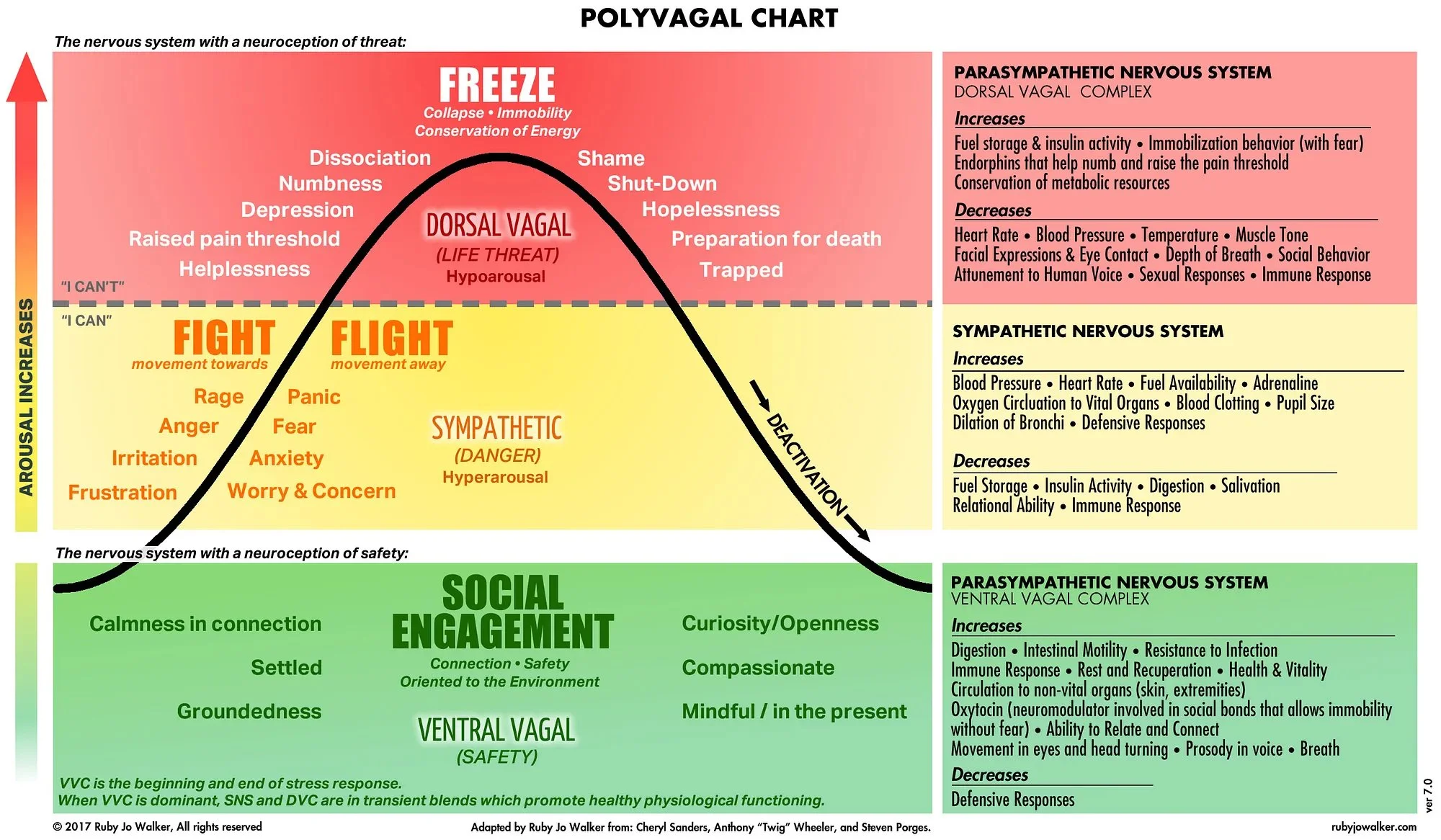
As you can see from the image above, the highest stress point causes freeze. Freeze happens on a spectrum. In the work place it might look more like going quiet in a meeting, not speaking up against a co-worker or supervisor who is being inappropriate, allowing others to take credit for one's own ideas or work, laughing and going along with things that make one feel sick inside, etc. Diversity helps us widen who is a part of the work place. This is a value to the company because it brings in more perspectives that will bring more collective wisdom. But because diversity can be limited by bias to certain categories (e.g. diversity in age but not in race, gender, etc.) Equity helps diversity stay accountable. Inclusion does the same for Equity by not only creating seats at the table for people but ensuring they have a voice. Belonging continues this trend of helping the previous letters meet their goals. With all of DEIB you are increasing psychological safety in the work place which helps people have a better chance of staying in the green of social engagement (this is good for creativity, problem solving and productivity) and out of the yellow of fight or flight and the red of freeze. Belonging brings this home by helping people feel that their inclusion is not a burden, that their personal experience is not alien or isolated but understood by the community of their workplace. Belonging helps people feel they fit. When people feel they fit they can naturally be authentic and have a voice easier. This is how Belonging helps Inclusion meet its goals and makes the green of social engagement even easier.
#DEI #DEIB #PsychologicalSafety #Polyvagal #Belonging
Taking Back Yourself From Narcissistic Leadership
To take back yourself from narcissistic leadership we have to start with understanding what does that term even mean.
Whether it’s toxic leadership in religious communities and churches, companies or politics more and more people are finding a voice to call out these ways and say they are not okay. To take back yourself from narcissistic leadership we have to start with understanding what does that term even mean. Really it is a description of trauma that was never helped and so created a pattern of coping that became habit which became personality.
Trauma specialist Peter Levine defines trauma in many ways but one of them is “incomplete self protective actions waiting to complete”. When we get overwhelmed and there is no one able to help us we freeze. Freeze is the highest level of activation (not fight or flight). In freeze we experience terror, helplessness, and we shut down to cope. This is natural however what is not natural is for this biological emergency break to stay on for long periods of time. Levine discovered that most animals in the wild do not get PTSD despite going through life threatening situations (like almost being eaten). This is because they allow their nervous systems to complete the fight, flight and freeze impulses their body initiates when threatened. As humans however we often don’t allow ourselves to complete fight, flight or freeze (due to a ton of different reasons). This means that the enormous amount of energy that is initiated in the fight, flight or freeze reaction becomes stuck in our bodies. We do all that we can to not re-engage that energy because it’s overwhelming. We don’t want to feel the fear, rage, helplessness, isolation, chaos, etc. of those states especially if we don’t understand why we are feeling that way. Problem is the incomplete past won’t stay in the past.
When we experience something that has similar enough feelings, events or pieces to our original painful experiences that we are still holding our brain does what it’s supposed to do. Which is to re-engage how we survived (coped) last time. Meaning, it says something like, “I know what this moment is because I’ve lived a moment similar to this before. It’s a threatening moment and I remember how I survived last time so I will re-activate all those ways to ensure survival again.” So the way we looked away, tightened our lips, clenched our jaws, the ways our muscles tighten in our legs, gut or chest, the way our bowels felt, the feelings we had, the meanings we made about the moment, all re-activate to attempt to adapt and keep us alive and keep the feelings and survival mechanisms from completing.
Part of that will be to dissociate from those bodily awarenesses. To do that we may use outside things to distract us (e.g. needing things to be super exciting or interesting or quick hits of novelty, needing things to be zen and not upsetting at all, needing things to not be about anything meaningful to keep it surface level and superficial) or we may use inside things (becoming hyper sexual, arrogance, becoming hyper rational, staying in go mode for longer than normal, thinking everyone else is at fault, thinking everything is our fault, needing to be around powerful or attractive people, getting depressed, getting anxious, etc.). Of course we often use outside and inside distractions simultaneously. Over time this creates a pattern of feeling/thinking/behaving that is automatic/unconscious and so frequent that it becomes a part of our personality.
So what happens when this is in the background of a leader, especially a founder? Often what happens first is the company gets set up so that it’s difficult for there to be accountability for the leader. This helps the leader continue to use the original ways they have coped (e.g. maybe they become manic and make a bunch of changes really quickly - emailing late into the night, maybe they become critical and bully-ish, maybe they say sexist things or really vulgar jokes, etc.). This could look like the HR department is non existent or is hampered in some way. Or perhaps a co-dependent culture is cultivated from the start so that everyone knows implicitly you don’t cross them or you get fired. Or there is little to no Diversity, Inclusion, Equity or Belonging initiatives.
It gets so complicated when money, security and livelihood feels on the line. We stop listening to our guts and our authenticity. We utilize our own distractions in order to calm our reactions to what doesn’t feel right in order to not feel anxious about losing our jobs or causing problems in an area that could affect our ability to earn and provide. Or in the case of religion we potentially fear disconnection from the Divine.
Really, the strongest thing we can do is become more conscious. The more conscious we are of our feelings and convictions the more we can make a conscious choice as opposed to an automated one that is based on a past survival strategy. We may choose to stay somewhere because it feels worth it to us and learn to adapt through having other support systems. We may choose to confront problematic people and systems. We may choose to leave. Or something else. It’s not about right and wrong, healthy or unhealthy. It’s about being able to stay in touch with your own built in value system that lets you know what feels life giving and what doesn’t.
So how do we become more conscious? Well the first steps are to get in touch with what the signals are that we don’t feel okay. Ask yourself:
When something is off/when I don’t feel safe/when I feel uncomfortable I:
Feel what?
My muscles, bowels and visceral do what?
Dream what?
Think what?
Say what?
Do what?
Don’t feel what?
My muscles, bowels and visceral don’t do what?
Don’t dream what?
Don’t think what?
Don’t say what?
Don’t do what?
Transference
Transference is when we treat the present like the past. Transference is an automatic, unconscious process. I’m psychotherapy this happens when our bodies start to experience the therapist as not safe enough to express what you really feel or think even though they have not given any objective reasons to not trust them and after a trusting relationship has been established. This is because something has occured that your system read as similar enough to a dangerous or painful experience in the past (may even be as far back as the first two years of your life) and determined the present is not safe and should be treated like you treated the moment in the past. This self protective conviction might be unconscious and only symbolized in how you act (as opposed to being symbolized in conscious thought). Some examples of what that could look like are: you might start being pleasing, lying, coming late, going late, not knowing what to talk about, avoiding your feelings and chit chatting more, getting upset, shutting down, feeling suddenly tired, getting a headache or having stomach pains, blaming the therapist for something, etc.
These actions could symbolize something vulnerable is being felt but for any number of reasons (perhaps you’re angry at the therapist but anger is not comfortable or safe to express for you, perhaps you felt misunderstood by the therapist and hurt but expressing hurt feels too vulnerable, perhaps because the therapist is a different gender than you and you have a history with someone of that gender not being supportive, perhaps because you saw the therapist look away and they seemed disinterested for a moment, perhaps the therapist was late themselves or made some kind of scheduling error, perhaps you found out something about the therapist like that they’re religious or have a family or are different in some way than you thought, etc.) your system has automatically decided they are not safe to express what you’re feeling.
Because this is such a relationship dependent process usually one to three times a week for an extended time (6 months up to several years) is best for this process to occur.
Now I realize that this all sounds very vulnerable and perhaps you might be thinking that this is way too intense (and expensive!). But think of it this way, you have one life and these things are going to happen with people in our lives either way, why not find out if they can happen with someone trained to help us with these things so real change can occur?
What is this psychoanalytic therapy thing?
See my previous post that describes what brings most people into therapy, “the problem”.
One of the ways we have for helping you create solutions that actually solve for your underlying emotional stress is through psychoanalytic therapy. In many ways this looks like regular therapy (attachment based, relational, emotion and neuroscience informed, etc.) but the main difference is being able to mine the therapy relationship. See, most therapies focus on what you experience with yourself and with others. This is helpful but often a step removed (since others are not in the room during therapy). Because the therapist is a human and you are in a human relationship with them (albeit a professional one) it is possible that you might start to experience some of your automatic solutions that don’t actually solve in reaction to the therapist. When that happens the therapist and you can recognize what’s happening (i.e. interrupt the automatic) and begin to understand how that came about (both of you can explore how you each contributed to the moment) and work to identify what is really being felt and needed. This is called working with transference. Doing this provides opportunity for your brain to rewire.
Mental Health Game Changer TOOL #1: Orienting
The Problem
Most people who come to therapy are stuck in anxiety or avoidance (intense enough avoidance is called depression). These are not choices they’ve made or flaws. Instead they are automated reactions that have been learned and are attempting to solve for an emotional they are feeling. Emotions tell us how we are doing in terms of surviving and thriving and what we need to do to adapt to the moment. Anxiety (a product of fear) alerts us to a perceived threat. But is the threat from the inside (other feelings you’re trying not to feel) or is it from the outside (something in your world that isn’t good for you: a toxic relationship, a negative situation, a demand that’s not sustainable or doable, etc.) or both (often an event triggers memories of a past event, even only slightly related, and we are flooded with the feelings of the past which cloud the present)? Wherever the problem is the current solution of over thinking and vigilance is not solving the problem (ie it’s not taking away the emotions). Instead the anxiety is only adding suffering on top of the emotions.
When that happens people naturally try to get away from the suffering of the extended anxiety with avoidance. They distract themselves. We use all kinds of things to do this. Some of them happen with a level of consciousness (although probably not with mindfulness) and some happen much more automatically: smoking, rage (or other emotions that mask the feelings being avoided), drinking, drugs, shopping, watching TV and movies, pornography, food, focusing more on others than ourselves, hobbies, sex, exercise, cleaning the house, playing on our phone, blaming others, becoming judgmental, getting paranoid (unconsciously putting the problem outside of us making others the threat so we don’t feel the emotions we have on the inside), becoming black and white in our thinking, causing a scene, becoming obsessive or compulsive, attributing our feelings to other people (saying they are the ones feeling this way instead of us), etc. These distractions help for a bit but don’t solve the emotional problem we have so when the distraction is over the anxiety returns (and sometimes if what we used to distract also caused problems or went against our personal morals we can feel ashamed or guilty on top of anxious which is already on top of the original emotional problem).
The Solution
What we do here at Analog is help you develop solutions that actually solve. We target your nervous system, memories and core emotions to create real change. A lot of therapies are too hot or too cold. Therapies that are too hot are all about the intesity and the cathartic experiences. This creates relief but actually creates an addiction cycle over time where the system learns it has to build up to a breaking point to release. It doesn’t learn how to release in a measured way that allows the nervous system to metabolize the stress. Additionally, too much too fast can re-overwhelm the nervous system causing shut down. So too hot can create three problems: you learn that the only way to have relief is the mountain top, you feel terrible all over again and you don’t create actual change.
The too cold are the therapies that just talk and think. They stay away from the heat of the visceral emotions. We know from neuroscience that without feeling something viscerally we can’t change how our brain is wired. And it really helps to feel something with someone else so they can help us co-regulate the feelings. Our brains need experience to cause neuroplasticity (the academic word for the fact that our brain can rewire) and emotion is what provides experience. So all talk will equal more knowledge and likely some emotion but little change to the automatic stuff.
We work on that Goldilocks solutions of not too hot or too cold. We help you build resource in your nervous system, the ability to feel calm and peace so that you can take on, slowly and little by little, the stress/pain/suffering/trauma you have. By going back and forth between resource and stress and by using a bunch of different ways of engaging those things (from both Somatic Experiencing and Psychoanalytic Therapy) we help you tackle the mountain you hold inside without major catharsis but with deep change and relief.
Game Changer Tool #1 : We start with attention in vs. attention out.
Step one is awareness. Can you notice how you are? Often we are so stuck in our routine of anxiety or avoidance we are unaware of the actual emotional problem that we are trying to solve (with a solution that doesn’t solve).
Step two is then moving from noticing the inside (attention in) to noticing your environment (attention out). This simple tool is a game changer. When you move from “attention in” to “attention out” you give your nervous system a break and a chance to reset. This is needed for being able to handle the stress inside eventually. This move of attention out comes from Somatic Experiencing and is called Orienting. You can orient by just slowly looking left to right or right to left, trying not to think but just taking in the visual of where you’re at. Notice colors, textures, lighting, images, shapes, etc. whatever catches your eye. Do this for a minute or two. If you start to feel negative because you’re environment is bothering you then stop and utilize touch instead. Notice a texture by feeling it and focusing on how it feels on your skin. By doing this you likely will feel more present and grounded but that is not what you’re trying to do - this is not about grounding. What you’re trying to do is move from attention in to attention out. This allows you to start to be able to have a hand you can put in the elevator to stop an automatic solution that doesn’t solve.
Somatic Experiencing: SIBAM
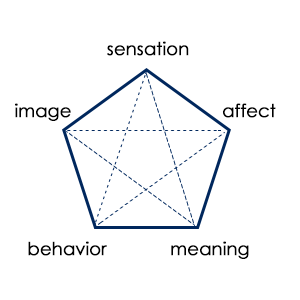
Somatic Experiencing is not as well known as some other therapies like EMDR or Cognitive Behavioral Therapy or even Psychoanalysis but it is something that continues to amaze me with how versatile and effective it is. I want to tell you about just one piece of Somatic Experiencing, SIBAM.
SIBAM stands for Sensations, Images, Behavior, Affect and Meaning. These act as names for some of the basic channels of information we can draw on to understand life.
Sensations - these are the visceral experiences that you feel inside your body. You can feel them in your head, jaw, face, throat, neck, shoulders, arms, hands, chest, back, stomach, hips, legs, feet, etc. They can feel like tightness, looseness, whoosing, knots, vibrations, tingling, activation, energy, etc. They can have various temperatures associated with them (hot, cold) and can feel good, bad, neutral or some kind of combo.
Imagery - these are the images in the mind’s eye that can include what feels like random abstract imagery all the way to distinct memories being recalled.
Behavior - these can be movements, impulses for movements, impulses for other types of motion
Affect - feelings and emotions
Meaning - thinking and narrative making, creating understanding and meaning
What’s really helpful about Somatic Experiencing is that it helps people learn to tune into these various channels and shift between them in order to best help their nervous system and their body recover from the sufferings of life in a way that feels organic and right. We are over cultivated to use thinking to deal with life but learning to privilege our other information channels really expands our world and our potential for recovery and growth. Perhaps you want to take some time today and just see if you can notice each channel in you?
We want change and Don't want change at the same time

Many want to use left brained strategies and mechanisms to try to solve for right brained problems. We have issues with feelings, regulation, judgment, hate, stress, concentration, hopelessness, etc. and we want to be able to think about those feelings/body-based phenomenon without having to feel them. Though thinking is less vulnerable feeling than feeling emotions is it is also like trying to move a large pile of dirt with a teaspoon. It’s also kind of like trying to scratch the itch on your arm by blowing on it. By staying with left brain only strategies we reveal how we want change and we don't want change at the same time. Part of the issue is that we can feel like we don’t know how to feel our feelings and move through things towards change without becoming overwhelmed and shutting down or blowing up or feeling dysregulated, totally not ourselves, depressed or toxically ashamed, etc. That is not your fault!! We need more specific help in therapy for how to engage our right brain and body in ways that are sustainable for our nervous system. I have found that Somatic Experiencing is a real gem when it comes to providing some of these important steps with dignity. With it’s emphasis on expanding out from just talking to tracking and expressing sensations, images/memories, behavior and movement, affect and emotions and meaning (SIBAM), and doing so in a bit by bit kind of way that aids the nervous system in recovering and strengthening, Somatic Experiencing offers something incredibly simple and incredibly powerful!