
Why Virtues Are a Symptom, Not a Goal
Nobody argues with virtues. Call someone joyful, generous, or hardworking and they'll be admired. Call someone envious or manipulative and they'll get side-eyed and avoided. Virtues are the kind of thing everyone agrees on, which is why we rarely stop to ask what actually produces them.
The temptation is to treat virtue as the goal itself. Just be more patient. Just be more grateful. It's a little like trying to keep a plant looking healthy without knowing anything about soil, water, roots, or light. The leaves might look fine for a while. They won't stay that way.
So what actually causes a virtue to happen?
Nobody argues with virtues. Call someone joyful, generous, or hardworking and they'll be admired. Call someone envious or manipulative and they'll get side-eyed and avoided. Virtues are the kind of thing everyone agrees on, which is why we rarely stop to ask what actually produces them.
The temptation is to treat virtue as the goal itself. Just be more patient. Just be more grateful. It's a little like trying to keep a plant looking healthy without knowing anything about soil, water, roots, or light. The leaves might look fine for a while. They won't stay that way.
So what actually causes a virtue to happen?
One word: regulation.
When emotions can be felt, expressed, and managed with some maturity, when the nervous system isn't constantly in survival mode, the psychological and physical systems we carry around tend to work closer to how they're designed to. Prosocial behavior, empathy, patience, honesty — these show up more naturally in a regulated nervous system (Tangney, Baumeister, & Boone, 2004; Gross & John, 2003). Virtues, in this frame, are downstream. They're a symptom of a system that's working, not a discipline you bolt on top of one that isn't (when that happens, people tend to look good but feel slimy or performative).
Which raises the obvious question: what causes dysregulation in the first place?
A lot of things, but a few big ones:
The world we live in. Many of us are sorted into communities of relative sameness, insulated by race, class, and geography from people whose lives look very different from ours. That insulation has a cost. Proximity to need tends to stir something in us. It activates care. When we're buffered from it, that activation never happens, and something in our moral and emotional life stays dormant (Putnam, 2000; Wilkinson & Pickett, 2009). Add to that an entire industry built around distraction and consumption, engineered to fill the emotional gaps rather than address them (APA, 2023).
How we were taught to handle feelings, or weren't. Many of us grew up in homes, schools, and cultures that didn't model emotional fluency particularly well. Not because people were bad, but because they didn't learn it either.
The hard things that happened to us. Adverse experiences, especially early ones, shape the nervous system's baseline (Felitti et al., 1998; Schore, 2003). Trauma isn't just between the ears; it's in our body and our actions (van der Kolk, 2014).
None of this is to say that gratitude journals are worthless. They're not. Wood, Froh, and Geraghty (2010) found real benefit in gratitude-based practices for wellbeing. But if your nervous system is dysregulated, you're trying to harvest from soil that hasn't been tended to yet.
So before the habit tracker, before the morning routine, before the virtue you're trying to practice into existence, ask what's underneath. Real change usually starts there.
References
APA. (2023). Stress in America 2023. American Psychological Association.
Felitti, V. J., et al. (1998). Relationship of childhood abuse and household dysfunction to many of the leading causes of death in adults. American Journal of Preventive Medicine, 14(4), 245–258.
Gross, J. J., & John, O. P. (2003). Individual differences in two emotion regulation processes. Journal of Personality and Social Psychology, 85(2), 348–362.
Putnam, R. D. (2000). Bowling alone: The collapse and revival of American community. Simon & Schuster.
Schore, A. N. (2003). Affect dysregulation and disorders of the self. W. W. Norton.
Tangney, J. P., Baumeister, R. F., & Boone, A. L. (2004). High self-control predicts good adjustment, less pathology, better grades, and interpersonal success. Journal of Personality, 72(2), 271–324.
van der Kolk, B. (2014). The body keeps the score: Brain, mind, and body in the healing of trauma. Viking.
Wilkinson, R., & Pickett, K. (2009). The spirit level: Why more equal societies almost always do better. Allen Lane.
Wood, A. M., Froh, J. J., & Geraghty, A. W. A. (2010). Gratitude and well-being: A review and theoretical integration. Clinical Psychology Review, 30(7), 890–905.
Six things you don't know about play but need to
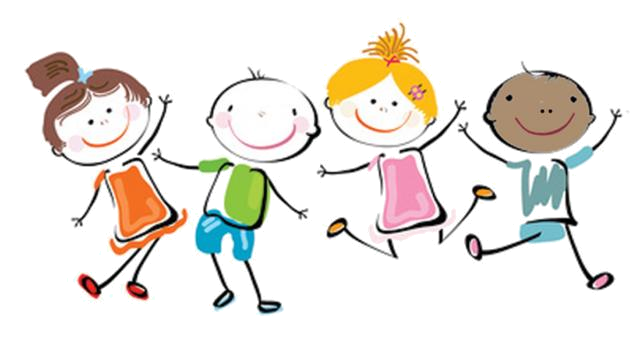
Most people don’t know that playing is a biological need and drive. In fact, PLAY is one of the seven basic emotion systems that our entire emotional lives are built on (in other words, PLAY is one of the seven basic tools we inherit at birth in order to survive - it's not trivial to play it's a necessity). All of this means that the PLAY system (when PLAY is capitalized it is referring to the brain system that produces an emotion, not an emotion itself) is a vital part of being a mammal and being a human. Here are six facts about playing that you might not know:
Even though play can come in tons of different forms (we can have intellectual play, sexual play, dramatic play, witty banter, etc.) its basic biological form is “rough and tumble play”. This is the chasing, wrestling, and physical type of play that we see the most in children (and maybe if you get down on the floor with your dog!).
Playing is a well researched option for helping to manage ADHD. The research suggests that incorporating rough and tumble play into the life of a child with ADHD can have strong positive affects on concentration and focus.
We learn how to live together through playing. Playing teaches us where the line is. Most play ends up in tears if you let it go long enough. That’s because eventually we lose the “as if” feeling when a line gets crossed. Those experiences teach us how to read each other and how to understand limits and rules that we later apply to living in society. We also try on roles in playing that we use later on. Often you see kids playing house or playing different parts of social hierarchy (e.g. cops and robbers, etc.). Playing prepares us for life together.
Empathy evolves out of playing. We develop our capacity for empathy from the PLAY system. Playing is governed naturally by a 60/40 rule. If someone is winning more than 60% of the time the other person will lose interest, feel bullied and disengage. The bully may take the toy but they won’t get the joy.
We need to play everyday otherwise our need for play builds up. If we don’t play today we will need to play twice as much the next day.
Playing produces social joy. Social joy combats despair. Making play a really good medicine for feeling down.